

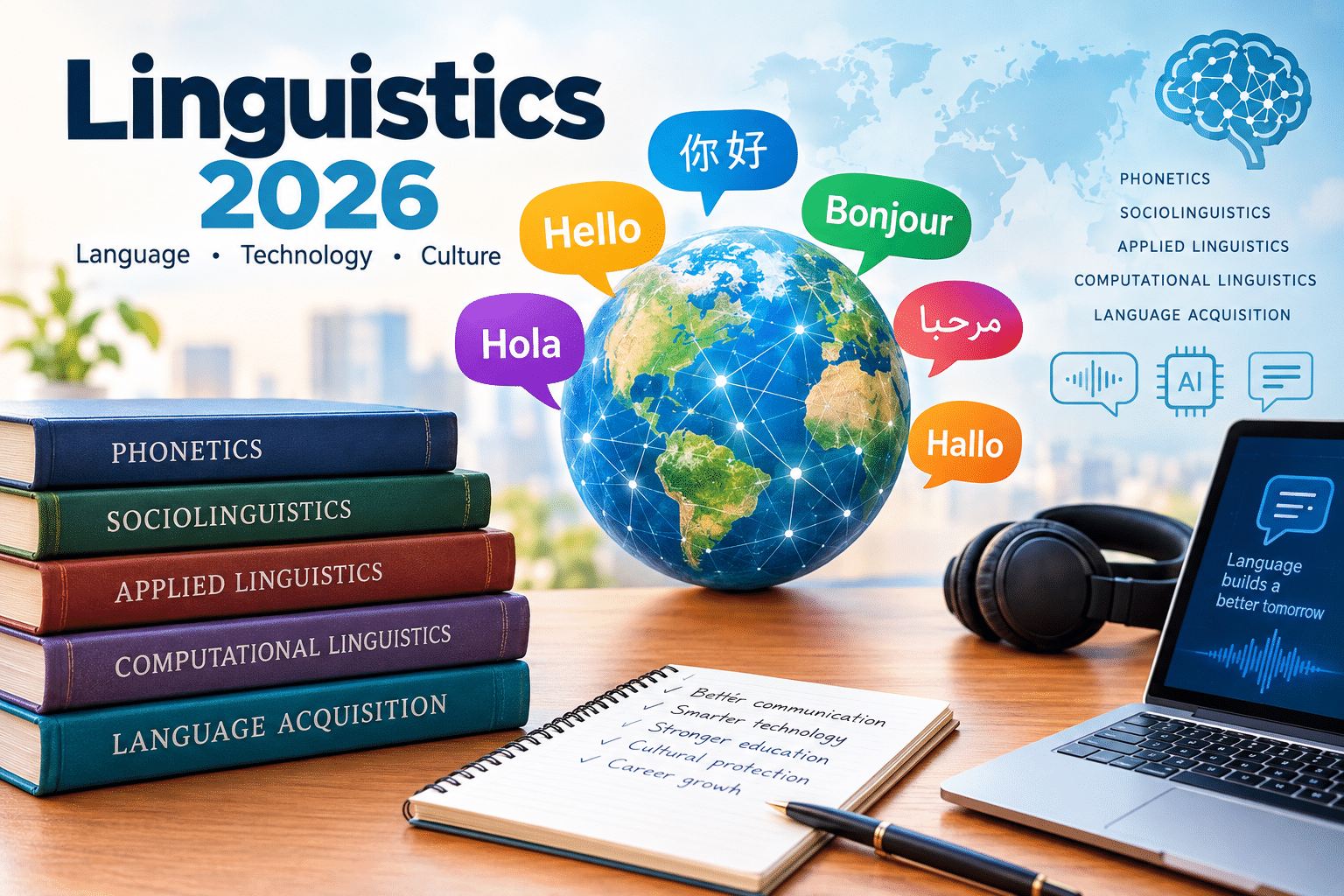
Linguistics is having a big moment in 2026. Every week, new studies show how people and machines learn, use, and change language. As a result, readers around the world now want to understand this field. In this guide, you will read today’s top linguistics news, learn the main branches, and find simple steps to begin.
Latest Linguistics News Today (September 2026)
Several fresh stories are shaping the field right now. Here are the highlights:
- AI in language learning: A new open-access study explores how generative AI-based personalized learning affects EFL students’ speaking and writing skills.
- Major award news: The AAAL named Lourdes Ortega as its 2026 Distinguished Scholarship and Service Award winner on September 12.
- Sign language research: Scientists published a multimodal dataset of facial expressions in Peruvian Sign Language.
- The bilingual brain: Another paper looks at how the age of learning a second language shapes brain network activity in bilinguals.
However, these stories share one clear theme. Technology and human language now grow side by side.
Why Linguistics Matters in Everyday Life
Linguistics explains how people build meaning with sounds, words, and grammar. Additionally, it powers many tools you use daily. Chatbots, voice assistants, and translation apps all rely on language science.
Here are the top benefits:
- Better communication: You learn why misunderstandings happen.
- Smarter technology: Engineers use language rules to train AI models.
- Stronger education: Teachers apply research to help students learn faster.
- Cultural protection: Researchers record and save endangered languages.
- Career growth: Many industries now hire language experts.
Key Factors to Consider Before You Study Linguistics
Linguistics programs differ a lot from school to school. Therefore, check a few factors before you choose one.
Your Career Goals
Decide what you want to do first. Some students want research jobs. Others prefer teaching, translation, or tech roles.
Tech and Data Skills
Modern language research uses data and code. For example, many projects need basic Python or statistics. Fortunately, you can learn these skills step by step.
Language Exposure and Fieldwork
Real speech data matters. Look for programs that offer fieldwork, labs, or study abroad options. In addition, hands-on projects make your resume stronger.
Main Types of Linguistics You Should Know
The field has many branches. Each one asks a different question about language.
Computational Linguistics
This branch teaches computers to process human language. It supports search engines, chatbots, and speech tools. Moreover, demand for these skills keeps rising.
Sociolinguistics
Sociolinguistics studies how society shapes language. It looks at dialects, identity, and language policy. For instance, it explains why people speak differently across regions.
Applied Linguistics
Applied linguistics solves real-world language problems. It covers language teaching, testing, and translation. Consequently, it fits teachers and education planners well.
Phonetics and Psycholinguistics
Phonetics studies speech sounds. Psycholinguistics studies how the brain handles language. Together, they explain how children and adults learn to speak.
How to Choose Your Path in the Field
Follow these steps to pick the right direction:
- List your interests. Do you enjoy sounds, grammar, culture, or technology?
- Compare programs. Check courses, faculty research, and lab access.
- Try a free course. Online lessons help you test your interest.
- Talk to experts. Ask students and professors about their daily work.
- Start a small project. Record a dialect or analyze a short text.
Common Mistakes to Avoid
Many beginners make the same errors. However, you can avoid them easily.
- Thinking it only means learning many languages. In fact, it studies how language works.
- Ignoring data skills. Modern research needs basic technical knowledge.
- Skipping the news. New studies change the field fast.
- Choosing a branch too early. Explore first, then specialize.
Tips to Keep Your Skills Sharp
Language science grows quickly, so keep learning. Read one new research summary each week. Additionally, join online forums and follow trusted journals. Finally, practice by analyzing real conversations, news headlines, or social media posts.
Conclusion
Linguistics connects people, culture, and technology in a powerful way. The latest news shows growing links with AI, sign language, and bilingual brain research. Now is a great time to start learning. Pick one branch, read one study this week, and take your first step into linguistics today.