

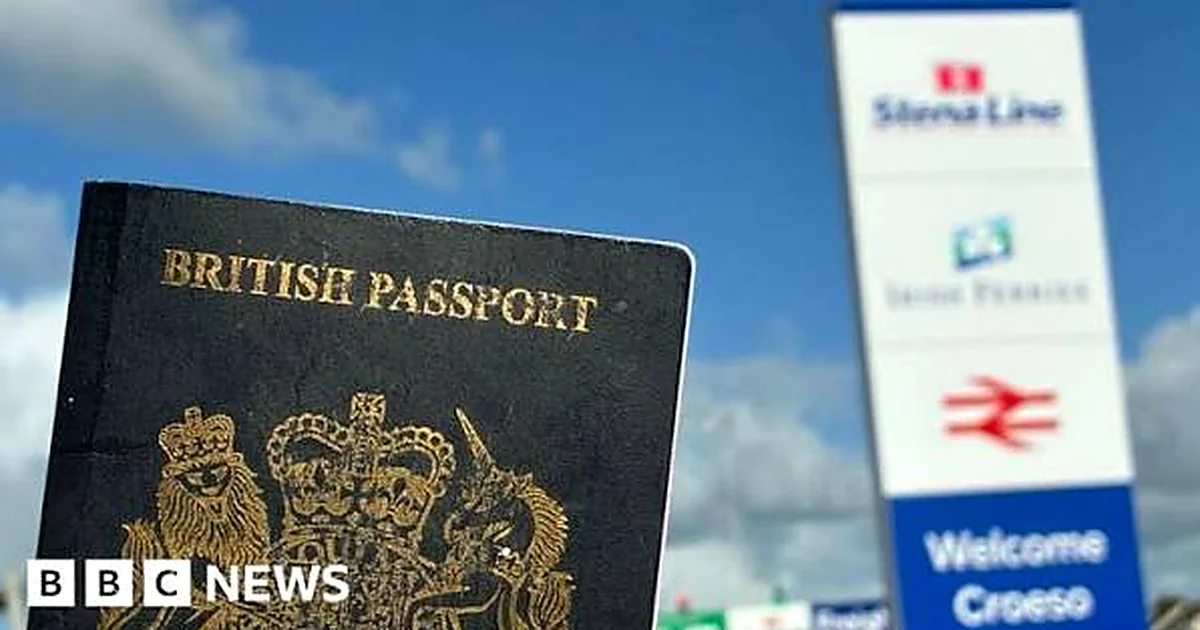
UK Ireland Ferry Passport Policy Takes Effect Today
The new UK Ireland ferry passport policy officially started on Monday, September 28, 2026. Passengers travelling between Britain and the Republic of Ireland by ferry now must show a valid passport before boarding. However, this marks a significant shift, since photo ID other than a passport was often accepted in the past.
Why the UK Ireland Ferry Passport Policy Matters
For more than a century, British and Irish citizens have been able to travel between the two countries without a passport under the Common Travel Area agreement. This UK Ireland ferry passport policy changes that in practice, even though the underlying legal right hasn’t disappeared.
Here’s why it’s such a big shift for travelers:
- Passengers previously could use other forms of photo ID instead of a passport.
- The rule now applies to all passengers, regardless of age or nationality.
- It brings ferry travel in line with rules airlines already enforce.
Additionally, UK Border Force said the change is meant to ensure the accuracy and integrity of passenger data before boarding.
Which Routes Are Affected
The UK Ireland ferry passport policy applies specifically to services between Great Britain and the Republic of Ireland. As a result, it’s important to understand exactly which crossings are covered.
Stena Line Routes
- Holyhead to Dublin
- Fishguard to Rosslare
Irish Ferries Routes
- Dublin to Holyhead
- Rosslare to Fishguard
However, there are currently no passport checks between the Republic of Ireland and Northern Ireland, since that land border remains unaffected by this policy.
What Counts as Valid ID Now
Under the new UK Ireland ferry passport policy, the rules are strict about what’s accepted.
- A valid passport is required for every passenger, including children and infants.
- Passport cards are accepted by both Stena Line and Irish Ferries.
- Birth certificates are no longer accepted for children.
- No other forms of photo ID will be accepted at check-in.
Consequently, families traveling with children should check in advance that every family member has their own valid passport, since children can no longer travel on a parent’s documentation.
What Happens If You Don’t Have a Passport
The consequences of arriving without proper documentation are serious. Passengers who arrive at the port without the required passport may be refused boarding entirely. This applies equally to British and Irish citizens, despite the Common Travel Area agreement.
Therefore, anyone planning to travel on these routes should check their documentation well before heading to the port, rather than assuming old ID rules still apply.
Additional Requirements for Non-UK and Non-Irish Citizens
The UK Ireland ferry passport policy includes an extra layer for travelers who aren’t British or Irish citizens. Irish Ferries has flagged that passengers visiting the UK for a short stay of up to six months may need an Electronic Travel Authorisation (ETA) before travel.
The ETA permits entry into the UK, as well as Jersey, Guernsey, and the Isle of Man, for stays within that period. As a result, non-UK and non-Irish travelers should check ETA requirements separately from the passport rule itself.
Practical Tips for Travelers
Here’s how to prepare for a smooth crossing under the new rules:
- Check your passport’s expiry date before travel; unlike Schengen countries, Ireland doesn’t require extra months of validity beyond the travel date itself.
- Make sure every child traveling has their own valid passport.
- Confirm passport card acceptance directly with your specific ferry operator before departure.
- Have your booking reference ready on your phone at check-in.
- Bring a card for payment at the port, since cash payments are being phased out on some routes.
Common Questions About the UK Ireland Ferry Passport Policy
When did the new passport rule start?
The rule took effect on September 28, 2026.
Does this affect travel between Northern Ireland and the Republic?
No, there are currently no passport checks on that border crossing.
Can children use a birth certificate instead of a passport?
No, birth certificates are no longer accepted; every child needs their own passport.
Common Mistakes to Avoid
- Don’t assume old photo ID rules still apply — passports are now mandatory on affected routes.
- Don’t forget that infants and children need their own passports, not a parent’s.
- Don’t confuse this with the Northern Ireland land border, which remains unaffected.
Conclusion
The UK Ireland ferry passport policy represents one of the most significant changes to cross-border travel in recent years, ending decades of flexible photo ID rules on key ferry routes. With Stena Line and Irish Ferries both enforcing the change from September 28, 2026, travelers should double-check their documentation well before heading to the port. When in doubt, confirm requirements directly with your ferry operator to avoid being turned away.