

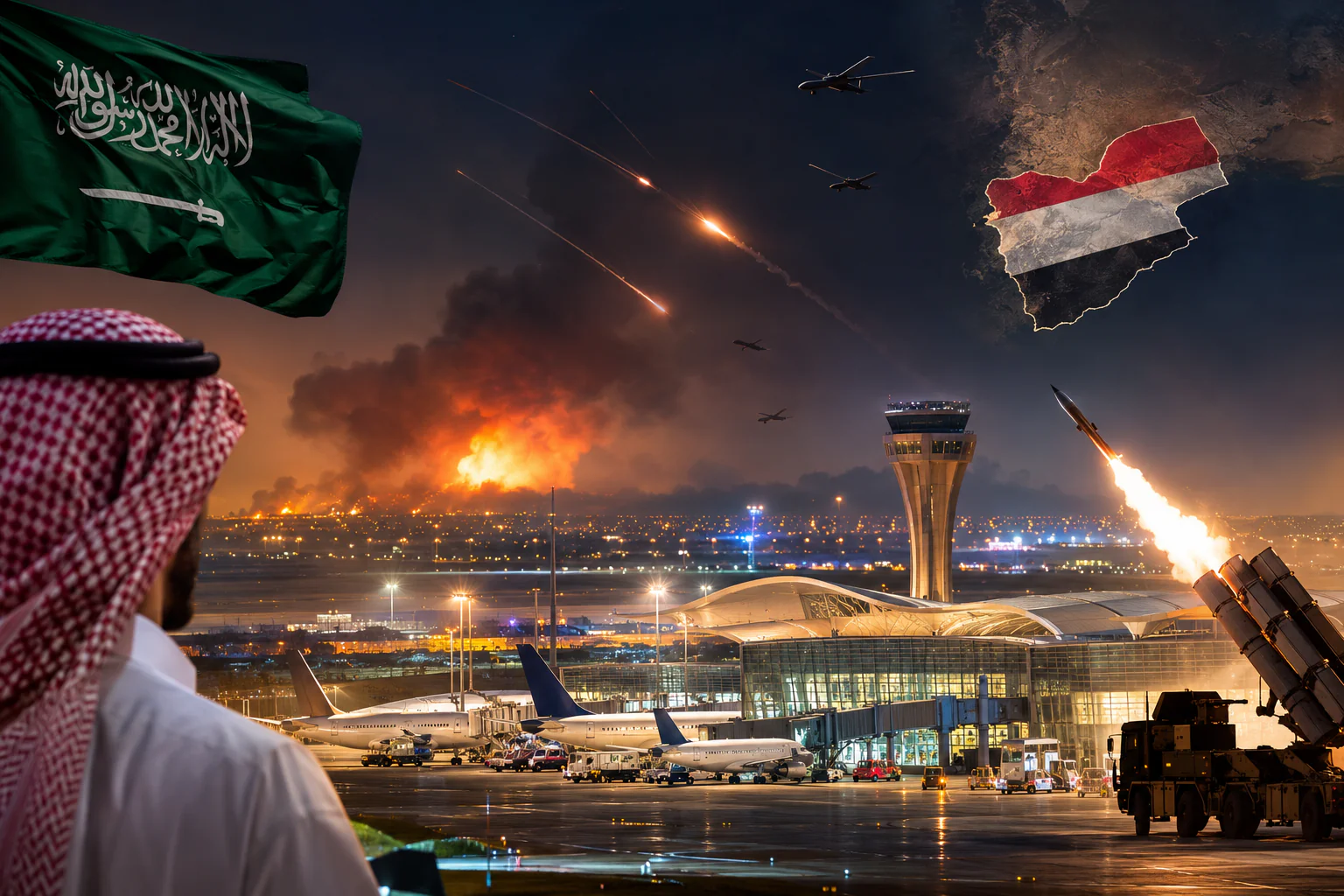
Houthi Missile and Drone Attacks 2026: What Is Happening Now
Houthi missile and drone attacks have entered a dangerous new phase this week. Yemen’s Houthi group is now striking airports deep inside Saudi Arabia. As a result, millions of travelers, airlines and energy markets face fresh risks.
This guide explains the latest news in simple terms. It also covers why the escalation matters and how you can stay informed.
Latest News: Houthi Missile and Drone Attacks Hit Riyadh Airport
The newest strike came on Saturday, October 10. At least 12 people died and hundreds were wounded when a Houthi missile hit Riyadh’s international airport, Saudi Arabia’s deadliest attack in more than a decade. This was the third missile strike on King Khalid International Airport this week.
The airport stayed closed until at least late Sunday, and more than 600 flights were cancelled. Meanwhile, Saudi air defenses also intercepted a cruise missile near the site.
Earlier strikes added to the toll. Saudi officials said three people, including a pilot, died in Thursday’s attack, which also damaged a Saudia plane. Additionally, Jazan and Najran airports near the Yemen border were hit. Casualty figures differ between sources, so expect updates.
Other Recent Strikes
- Wednesday, October 7: The Saudi-led coalition intercepted a ballistic missile aimed at Khamis Mushait.
- This week: Houthi fighters also fired ballistic missiles at Aden’s international airport.
- August: Attacks on the port city of al-Makha killed at least 11 people, then at least seven more.
Why Houthi Missile and Drone Attacks Matter to the World
First, civilians now sit in the line of fire. Airports serve ordinary families, workers and pilgrims. Therefore, attacks on them raise the human cost sharply.
Second, the strikes threaten global travel. Riyadh is a major hub linking Asia, Europe and Africa. Consequently, closures there ripple across airline schedules worldwide.
Third, the conflict could widen. Pakistan has confirmed it has troops in Saudi Arabia as the fighting escalates. In addition, the UN envoy for Yemen called the attacks a grave escalation, and UN chief António Guterres said attacks on civilians violate international law.
Key Factors Behind the Escalation
Several forces drive this Yemen war escalation. Understanding them helps you read the headlines clearly.
Fighting on the Red Sea Coast
The latest attacks followed Houthi advances along Yemen’s Red Sea coast and a Saudi-backed government counteroffensive. In other words, the battlefield moved, and the Houthis answered by hitting Saudi territory.
Airports as Primary Targets
Airports are high-value targets. They carry economic weight and symbolic power. Moreover, a single hit can shut down traffic for days.
Iran-Backed Support
Media often describe the group as Iran-backed Houthi rebels. However, the group’s exact supply lines remain disputed. Always check how each outlet sources this claim.
Types of Houthi Missile and Drone Attacks
Not every weapon works the same way. Knowing the difference explains why some strikes get through.
Ballistic Missiles
These fly high and fast. Defenders must detect and intercept them within minutes. The Riyadh strikes reportedly used this type.
Cruise Missiles
These fly low and follow the terrain. As a result, radar can miss them until late. Saudi forces intercepted one near Riyadh on Saturday.
One-Way Attack Drones
These are cheap and launched in groups. For instance, Yemen’s military said it shot down 11 drones in one August attack on al-Makha. Swarms can overwhelm older defenses.
How Travelers and Businesses Should Respond
Follow this simple decision guide when planning trips or shipments:
- Check airline alerts before you leave for the airport.
- Review government travel advisories from your country.
- Track Houthi missile and drone attacks through trusted wire services, not social media rumors.
- Build buffer time into itineraries that pass through Gulf hubs.
- Ask your insurer whether war-risk exclusions apply to your policy.
For deeper context, read our guide on the Red Sea shipping risk.
Common Mistakes When Following Houthi Missile and Drone Attacks
Breaking news moves fast. Unfortunately, so does misinformation. Avoid these errors:
- Trusting one source. Each side claims success. Therefore, compare at least two independent outlets.
- Treating every claim about Houthi missile and drone attacks as verified. Early casualty numbers often change.
- Sharing unverified videos. Old footage often resurfaces as “new.”
- Ignoring the wider context. A single strike makes sense only within the larger war.
Safety Tips During Houthi Missile and Drone Attacks
If you live in or visit an affected area, stay prepared:
- Follow official alerts on your phone.
- Know the nearest shelter or secure indoor space.
- Keep a charged power bank and your documents ready.
- Avoid airports and military sites during active alerts.
- Contact your embassy if you need help.
Conclusion
The situation changes by the hour. Airports have become front-line targets, and the human toll keeps rising. Meanwhile, diplomats are warning of a wider regional war.
Bookmark this page and share it with anyone who travels through the Gulf. Subscribe to our newsletter for daily updates on Houthi missile and drone attacks and their global impact.