

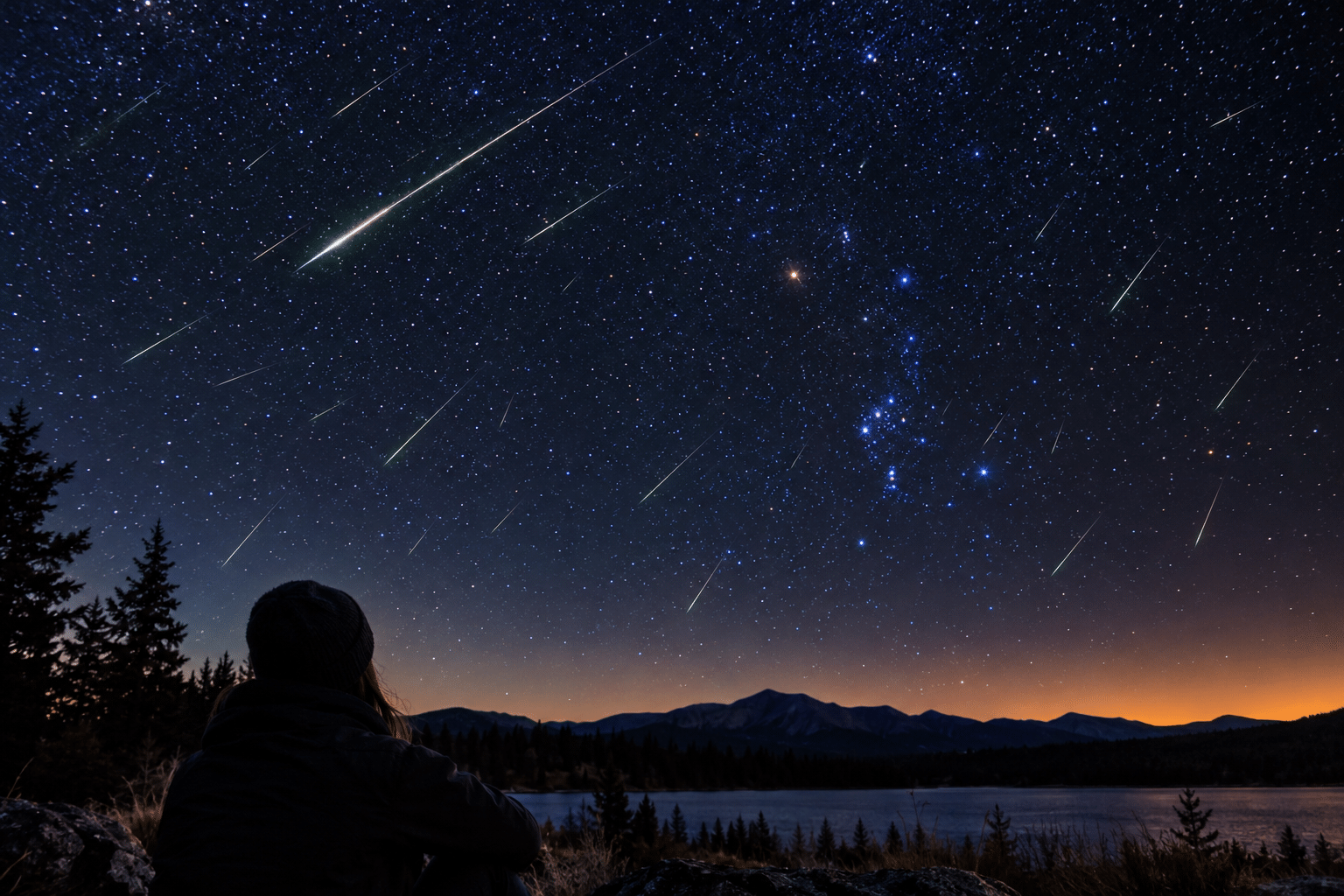
Meteor Shower 2026: Stunning Orionids Peak This Week
A meteor shower is about to light up the night sky, and skywatchers in the US and worldwide can join in. The Orionids are building to their peak right now. Best of all, you need no telescope, only a dark spot and a little patience.
NASA says the Orionids stay active through 7 November 2026, with the peak expected on the night of 21–22 October. Here is everything you need to know before you head outside.
Why This Meteor Shower Matters
This event connects you to one of the most famous objects in space. Halley’s Comet is the parent of both October’s Orionids and May’s Eta Aquariids. In other words, you will watch Halley’s Comet debris burn up in our atmosphere.
Additionally, a meteor shower is free, family-friendly and easy to enjoy. It also gives beginners a simple reason to learn the night sky. As a result, many people start a lifelong stargazing habit this way.
Key Facts About the Orionid Meteor Shower 2026
The Orionid meteor shower returns every autumn. However, each year brings different sky conditions. These are the facts that matter most in 2026.
Peak date and time
Most guides point to the night of 21–22 October. However, EarthSky lists a predicted peak at 06:54 UTC on 23 October, using American Meteor Society data. Peak times can shift, so plan for several nights.
Fortunately, the peak is broad, so 20–21 October and 22–23 October also offer strong activity.
How many meteors to expect
The International Meteor Organization expects about 20 meteors per hour under a very dark sky. Moonlight will cut that number. In practice, expect around 10 per hour from a truly dark location.
The Moon problem
The peak falls under a waxing gibbous Moon that is 70–80% lit. However, the Moon sets late at night. From New York, it sets at 03:12, so the sky turns dark at the best time.
Additionally, the full Moon arrives on 26 October. Therefore, the pre-dawn hours give you the darkest sky.
Best Time to Watch the Meteor Shower
Timing makes the biggest difference. Follow this simple plan:
- Check your local Moon-set time.
- Head outside after the Moon sinks below the horizon.
- Watch until dawn twilight begins.
- Repeat on two or three nights for better odds.
Where to look
The Orionid radiant sits in Orion, north-east of the red star Betelgeuse. However, you do not need to stare at that spot. Meteors can appear anywhere, so look at the widest patch of sky you can see.
Types of Meteor Shower Events
Not every meteor shower behaves the same way. Knowing the difference helps you set the right expectations.
Annual showers
Annual showers, such as the Orionids, return on schedule. Their rates stay fairly steady from year to year. As a result, they suit casual watchers best.
Outbursts and storms
Occasionally, a shower produces far more meteors than normal. These outbursts are rare and hard to predict. Meanwhile, annual showers remain your reliable choice.
What comes next
The sky show does not end after the Orionids. The Leonid meteor shower peaks around 17–18 November 2026. Mark your calendar now.
Decision Guide: Where to Watch
Choose your location with this quick guide:
- City backyard: You will see fewer meteors, but bright ones still appear.
- Suburban park: This is a good balance of convenience and darkness.
- Rural dark-sky site: This gives the best results, so go here if you can.
Use a free sky map or weather app to check cloud cover first. Clear skies matter more than any other factor.
Common Mistakes to Avoid
Many beginners lose their chance to see shooting stars tonight because of simple errors:
- Looking too early. The Moon washes out faint meteors before it sets.
- Checking your phone. Bright screens ruin your night vision.
- Giving up quickly. Meteors come in bursts, so wait at least 30 minutes.
- Using binoculars. They shrink your view, so use your eyes alone.
Meteor Shower Viewing Tips
These meteor shower viewing tips make your night comfortable and successful:
- Dress in warm layers, because October nights get cold.
- Bring a reclining chair or blanket.
- Pack a hot drink and a red-light flashlight.
- Give your eyes 20 minutes to adjust to the dark.
- Put a tree or building between you and the Moon while it is still up.
Additionally, share the night with friends or family. It makes the wait more fun.
Conclusion
The Orionid peak is almost here, and the Moon will not ruin the show if you wait for the pre-dawn hours. Pick a dark spot, bring warm layers and look up. Bookmark this page, share it with a fellow stargazer, and check back in November for the next meteor shower.