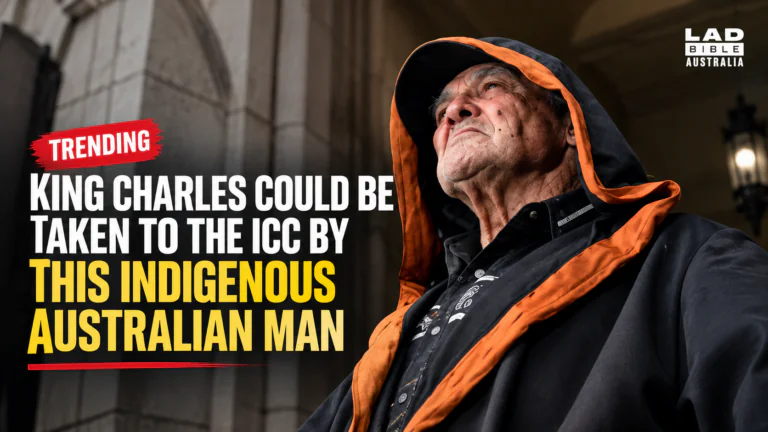


King Charles Genocide Case Rejected by Australian Court
The King Charles genocide case brought by Aboriginal elder Robbie Thorpe has been rejected by Australia’s courts for a third time. Three appellate judges on Victoria’s Court of Appeal ruled against the bid on Monday, September 28, 2026. However, Thorpe has already signaled he intends to keep pursuing the matter, this time through the International Criminal Court in the Netherlands.
Why the King Charles Genocide Case Has Drawn Attention
This isn’t a routine legal filing. The King Charles genocide case touches on serious, long-standing allegations about the treatment of Indigenous Australians under British and Australian institutions.
Here’s why the case has generated significant coverage:
- It marks the third legal defeat for Thorpe in this specific campaign since 2023.
- King Charles III also serves as Australia’s head of state, giving the case direct constitutional relevance.
- Legal experts say the case highlights real limits on how individuals can pursue international genocide allegations.
Additionally, the ruling leaves Thorpe with only one further domestic option: seeking permission to appeal to the High Court of Australia, which accepts only about 10% of such applications.
Who Is Robbie Thorpe
Robbie Thorpe, 68, is a respected elder of the Krauatungalung people and a longtime Aboriginal rights activist. He also hosts Fire First, a program on Melbourne community radio station 3CR. As a result, Thorpe brings both a personal and public platform to this ongoing legal campaign.
What the King Charles Genocide Case Actually Alleges
Thorpe’s case argues that King Charles III, along with the Australian government and its institutions, is perpetuating genocide by maintaining systems that disadvantage Indigenous people across numerous socioeconomic measures. It’s important to note this is Thorpe’s legal allegation, not a finding made by any court; every Australian court that has reviewed the claim so far has rejected it.
Why the Case Was Rejected
Limits of Australian Courts
According to legal experts, Thorpe’s attempt to pursue a private prosecution in a “low-level Australian court” ran into a structural obstacle. The International Criminal Court does recognize jurisdiction to prosecute genocide and does not grant head-of-state immunity. However, individuals like Thorpe don’t have the option to launch a private prosecution directly through the ICC, which is why his case was filed in Australian courts instead.
What Legal Experts Say About the ICC Path
Australian National University international law expert Don Rothwell explained that a formal ICC prosecution would likely need to come through a UN Security Council referral. However, he noted Britain would almost certainly veto any such move involving King Charles. Consequently, Rothwell said that if Thorpe has exhausted his options under Australian law, the most realistic step remaining is submitting evidence to the ICC that he believes constitutes genocide, rather than pursuing an actual prosecution.
Thorpe’s Response to the Ruling
Following the rejection, Thorpe said he did not expect to receive a fair hearing in Australia. He stated plainly that he plans to take his allegations to the International Criminal Court, saying, “The International Criminal Court will expose Australia for what it really is — a lying, racist, illegal occupation committing genocide.” This is Thorpe’s own characterization of the situation, and it remains a contested and unresolved allegation rather than a legal finding.
King Charles’s Role as Australia’s Head of State
It’s worth understanding why this case specifically targets the King rather than only the Australian government. King Charles III holds the formal position of Australia’s head of state, a constitutional arrangement dating back to British colonial rule. As a result, legal challenges concerning Indigenous rights in Australia have, in this case, extended to include the monarch directly rather than targeting only domestic Australian institutions.
What Happens Next in the King Charles Genocide Case
- Thorpe’s remaining domestic option is seeking leave to appeal to the High Court of Australia.
- The High Court accepts only around 10% of such applications, making further domestic success unlikely.
- Thorpe has stated he will pursue submitting evidence to the International Criminal Court regardless of the domestic outcome.
Therefore, while the domestic legal path appears largely exhausted, Thorpe’s broader campaign is expected to continue through international channels.
Common Questions About the King Charles Genocide Case
Who brought the case against King Charles III?
Aboriginal elder and activist Robbie Thorpe filed the case in Australian courts.
Did the court rule on whether genocide occurred?
No, the ruling addressed whether Thorpe’s private prosecution could proceed, not the substance of the genocide allegation itself.
Can Thorpe still pursue the case internationally?
He has stated he intends to submit evidence to the International Criminal Court, though legal experts say a formal prosecution would face significant obstacles.
Common Mistakes to Avoid
- Don’t characterize this ruling as a finding on whether genocide occurred; it addressed procedural and jurisdictional issues.
- Don’t assume Thorpe can directly file a case with the ICC; individuals cannot launch private prosecutions there.
- Don’t confuse this case with a UK-based legal proceeding; it was filed and heard entirely within the Australian court system.
Conclusion
The King Charles genocide case brought by Robbie Thorpe has now been rejected three times by Australian courts, leaving him with narrow domestic options and a stated intention to pursue the matter internationally. While legal experts note significant practical barriers to any ICC prosecution actually proceeding, the case reflects an ongoing and deeply contested debate over Indigenous rights and historical accountability in Australia. This story presents the legal facts and both perspectives as reported, without taking a position on the underlying genocide allegation, which remains unresolved and strongly contested.