
Navy Fighter Jet Contract Goes to Boeing in $20 Billion Deal
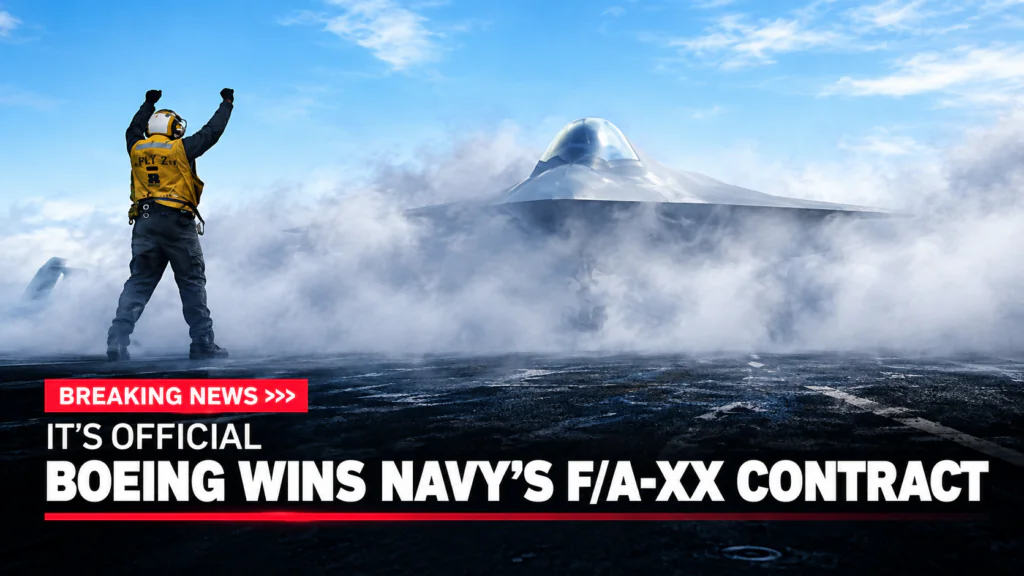
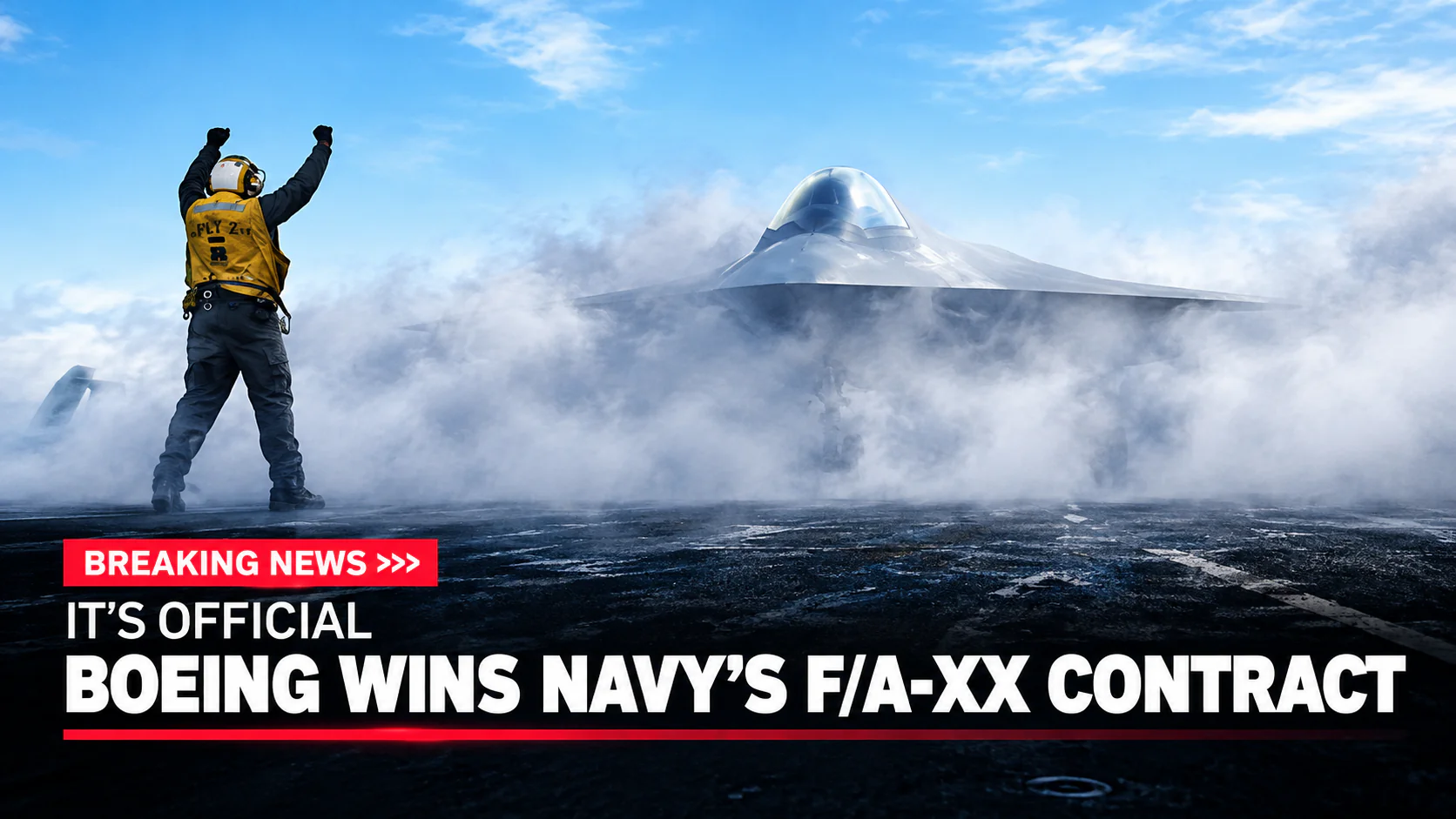
The Navy fighter jet contract for the next-generation F/A-XX has officially gone to Boeing. The Pentagon announced the decision on September 29, 2026, ending months of anticipation. However, this isn’t Boeing’s first major win in this space. It marks the company’s second consecutive sixth-generation fighter jet contract in as many years.
Why the Navy Fighter Jet Contract Matters So Much
This wasn’t just another defense procurement decision. The Navy fighter jet contract carries significant weight for both the military and the aerospace industry as a whole.
Here’s why the announcement is such a big deal:
- The contract is valued at more than $20 billion for the full-scale development phase.
- It comes after an 18-month pause in public updates about the program.
- Boeing beat out Northrop Grumman, its main rival for the award.
Additionally, the program could eventually grow to hundreds of billions of dollars over its full lifetime as production ramps up and potential international orders come into play.
What the F/A-XX Will Replace
A New Generation of Carrier Aircraft
The Navy fighter jet contract centers on building the F/A-XX, a sixth-generation, carrier-based stealth fighter. As a result, it will eventually replace the Navy’s current fleet of F/A-18E/F Super Hornets and EA-18G Growlers, both of which have served as the backbone of carrier aviation for years.
Timeline for Replacement
The new fighter is expected to begin entering service in the 2030s. Consequently, it will operate alongside the F-35C and Collaborative Combat Aircraft systems, rather than replacing the entire carrier air wing overnight.
Boeing’s Back-to-Back Fighter Jet Wins
A Notable Pattern
This Navy fighter jet contract award follows a similar win Boeing secured in March 2025, when it was selected to build the Air Force’s stealth F-47 fighter. Therefore, Boeing has now claimed both major sixth-generation fighter programs in the United States, effectively locking out its biggest rivals from this space for the foreseeable future.
A Turnaround Story
This is a particularly striking outcome for Boeing. As recently as early 2025, the company was reportedly at serious risk of exiting fighter jet production entirely. However, these two wins have repositioned Boeing as the sole domestic supplier of next-generation fighter aircraft.
What Boeing Has Said About the Award
Steve Parker, President and CEO of Boeing Defense, Space & Security, called the selection an honor, stating the company is “backed by decades of work” and “bolstered by game-changing innovations.” He also emphasized the company’s investment in new facilities designed to support multiple advanced programs at once, adding that Boeing is “ready and able to build multiple concurrent future combat aircraft franchise programs.”
Why the Navy Fighter Jet Contract Faced Delays
It’s worth understanding why this announcement took so long. Lawmakers only recently agreed on the Fiscal Year 2026 Defense Appropriations Act, which allocated $897 million specifically to F/A-XX and mandated the Pentagon award a development contract to accelerate the program’s initial operational capability.
As a result, the program had previously faced uncertainty, including reports the Pentagon considered freezing it altogether before ultimately moving forward with the competition between Boeing and Northrop Grumman.
What the Contract Actually Covers
The Navy fighter jet contract specifically funds the full-scale development phase of the program. This includes:
- Multiple test aircraft for ground testing
- Airworthiness testing
- Systems integration testing
- Weapons integration testing
Additionally, Boeing received a separate, smaller contract on the same day, valued at approximately $16.7 million, to support the final shutdown of the F/A-18E/F Super Hornet and EA-18G Growler production line.
How This Compares to the Air Force’s Announcement
Interestingly, the rollout of this Navy fighter jet contract looked very different from Boeing’s earlier F-47 win. The Air Force contract was announced in a live broadcast event from the White House. By contrast, the Navy’s announcement came through a more standard Pentagon press release, with officials noting that many technical and programmatic details about the F/A-XX remain classified.
Common Questions About the Navy Fighter Jet Contract
How much is the Navy fighter jet contract worth?
The initial development contract is valued at more than $20 billion, with potential growth into the hundreds of billions over the program’s lifetime.
What will the F/A-XX replace?
It will eventually replace the Navy’s F/A-18E/F Super Hornets and EA-18G Growlers.
Who did Boeing beat for this contract?
Boeing beat Northrop Grumman in the competition for the award.
Common Mistakes to Avoid
- Don’t confuse the F/A-XX with the Air Force’s F-47; they are separate sixth-generation programs for different military branches.
- Don’t assume the F/A-18 fleet will be replaced immediately — the transition is expected to begin in the 2030s.
- Don’t overlook that many technical details remain classified, so specific performance specs aren’t publicly available yet.
Conclusion
The Navy fighter jet contract represents one of the most significant defense procurement decisions of the year, cementing Boeing’s position as the sole US supplier of sixth-generation fighter aircraft across both the Navy and Air Force. With a $20 billion initial award and the potential for much larger long-term value, this decision will shape naval aviation strategy well into the 2030s and beyond. Expect continued coverage as more details about the F/A-XX program become available.