
Personal Allowance 2026/27: Latest Rules, Changes and Tax-Saving Tips
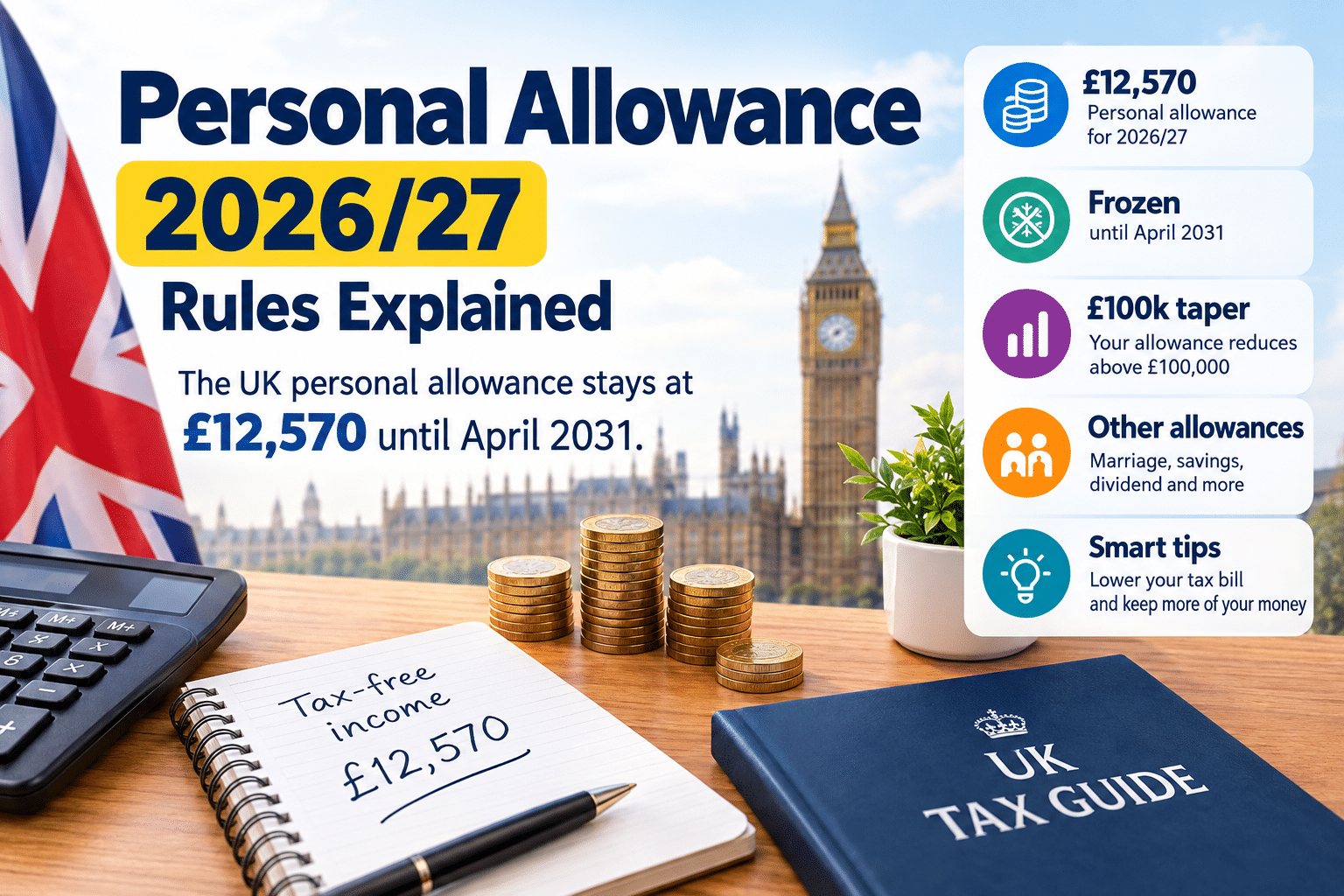
Your personal allowance decides how much income you keep tax-free each year. For the 2026/27 tax year, the standard amount is £12,570. However, the government has confirmed it will stay at that level until 5 April 2031. As a result, millions of workers now pay more tax as their wages rise. This guide explains the latest news in simple words, so you can protect your money.
Why the Personal Allowance Matters in 2026
The personal allowance affects almost every taxpayer. Therefore, even a small freeze has a big impact on your pay packet.
The higher-rate threshold stays at £50,270, and the additional-rate threshold stays at £125,140. Meanwhile, pay rises and inflation push more people into higher bands. Experts call this “fiscal drag.”
Here is why it matters:
- You pay 0% tax on your first £12,570 of income.
- A frozen threshold means you keep less of each pay rise.
- More workers move into the 40% band every year.
Key Factors That Affect Your Personal Allowance
Several rules can change how much tax-free income you get. Consequently, you should know each one.
The £100,000 Income Taper
Your personal allowance shrinks once your income passes £100,000. It falls by £1 for every £2 above that level, and it disappears at £125,140.
In this range, each extra £100 you earn can face an effective 60% tax rate. Many people call this the £100k tax trap. Additionally, National Insurance still applies on top.
Frozen Thresholds Until 2031
The freeze started in 2021. Budget 2025 extended it by several more years, so most thresholds will stay unchanged for a full decade. In other words, your tax-free income will not grow with inflation.
Where You Live in the UK
The £12,570 personal allowance applies across the UK. However, Scottish Income Tax rates and bands differ for certain types of income. Wales continues to match England’s income tax rates. So always check the income tax bands UK rules for your region.
Other Tax-Free Allowances You Should Know
Your personal allowance is not the only tax-free allowance. In addition, several others can lower your bill.
Marriage Allowance
Some couples can share their tax-free income. A spouse or civil partner can transfer 10% of the allowance, which cuts tax by up to £252. You can also backdate a claim by up to four years.
Savings and Dividend Allowances
The personal savings allowance stays at £1,000 for basic-rate taxpayers and £500 for higher-rate taxpayers. Meanwhile, the dividend allowance stays at £500, but dividend tax rates rise by 2% for basic and higher-rate payers.
How to Get the Most From Your Personal Allowance
Follow these steps each tax year:
- Check your tax code. Most people have 1257L. A different code may mean HMRC has the wrong details.
- Add pension contributions. Extra payments can lower your adjusted net income below £100,000.
- Claim marriage allowance. Eligible couples should apply as soon as possible.
- Use your ISA. You can save up to £20,000 in ISAs for 2026/27.
- Review every April. Your income and circumstances change, so your plan should too.
Common Personal Allowance Mistakes to Avoid
Many people lose money through simple errors. Avoid these:
- Ignoring your tax code. Wrong codes cause overpayments or surprise bills.
- Missing the £100,000 trap. Ignoring it can cost thousands.
- Forgetting untaxed income. Rental or side income can reduce your allowance.
- Skipping marriage allowance. Many eligible couples never claim.
- Trusting old articles. Some websites still show outdated freeze dates.
Simple Habits to Keep Your Tax Record Healthy
Good habits protect your tax-free income. First, save payslips and P60 forms. Next, update HMRC after a job change. Finally, check your online tax account twice a year.
Conclusion
The personal allowance remains at £12,570 for 2026/27, and the freeze runs until 2031. Therefore, smart planning matters more than ever. Check your tax code, watch the £100,000 limit, and use every allowance you can. Take action this week: log into your HMRC account and confirm your personal allowance is correct. Then share this guide with a friend who pays tax.