

A gas leak can turn a normal day into an emergency within minutes. Today, a gas leak near Didcot Parkway station in the UK shows how fast one incident can disrupt thousands of lives. A Do Not Travel warning is in place because the leak has caused major disruption between Reading and Swindon. However, you do not need to live near a railway to face this risk. Millions of homes worldwide use gas every day, so everyone should know the warning signs and safety steps.
Gas Leak News Today: Didcot Rail Disruption
Great Western Railway has warned passengers to avoid travel on the affected route. A safety exclusion zone is in place, and the railway sits inside it. Additionally, SGN engineers are on site, and trains cannot run until the leak is repaired.
SGN said the exclusion zone is necessary for safety reasons and apologised for the inconvenience. As a result, travellers should check their operator’s website before they leave home.
Similar events happen worldwide. In the US, for example, Wisconsin regulators asked Enbridge to stop work after a leak triggered evacuations in Iron County.
Why a Gas Leak Matters
A leak is never a minor issue. Gas can harm people, property, and the planet at the same time. Here is why acting fast matters:
- Fire and explosion risk: A single spark can ignite gas that builds up indoors.
- Health danger: Leaked gas can displace oxygen and cause serious illness.
- Environmental harm: Natural gas is mostly methane, a powerful greenhouse gas.
- Costly damage: Repairs, evacuations, and lawsuits can cost businesses and families a lot.
Key Warning Signs of a Gas Leak
Early detection saves lives. Therefore, learn what to look for, listen for, and feel.
What You Can Smell, Hear, and See
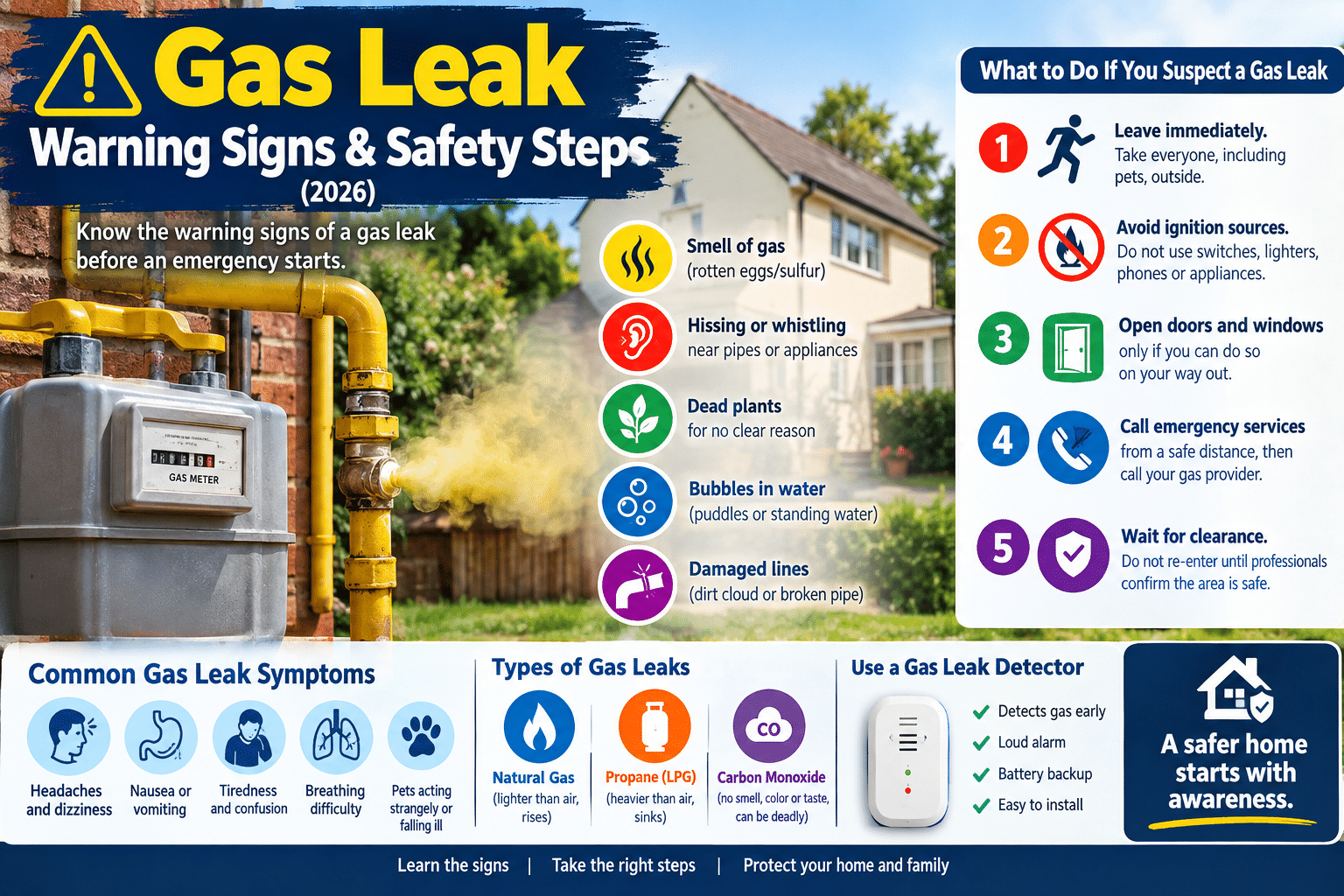
- Smell of gas: Suppliers add a chemical that smells like rotten eggs or sulfur.
- Hissing or whistling: These sounds near a pipe or appliance often signal escaping gas.
- Dead plants: Grass or houseplants may die for no clear reason near a buried line.
- Bubbles in water: Bubbles in puddles or standing water can point to an underground leak.
- Damaged lines: A dirt cloud or broken pipe near a gas line needs immediate attention.
Common Gas Leak Symptoms in People
Exposure often causes physical warning signs. These gas leak symptoms include:
- Headaches and dizziness
- Nausea or vomiting
- Tiredness and confusion
- Breathing difficulty
- Pets acting strangely or falling ill
If several people in one room feel sick at once, leave the building immediately.
Types of Gas Leaks
Not every leak is the same. In addition, each type needs a slightly different response.
Natural Gas Leaks
A natural gas leak is the most common household type. It usually comes from cracked pipes, loose fittings, or faulty meters. Natural gas is lighter than air, so it rises and spreads through upper rooms.
Propane (LPG) Leaks
Propane is heavier than air. Consequently, it sinks and collects in basements, low corners, and crawl spaces. Grills, RVs, and camping stoves are common sources.
Carbon Monoxide Leaks
Carbon monoxide has no smell, color, or taste. It comes from poorly burning fuel in heaters, boilers, and cars. Carbon monoxide poisoning can kill quickly, so every home needs a working alarm.
What to Do If You Suspect a Gas Leak
Stay calm and follow these steps in order:
- Leave immediately. Take everyone, including pets, outside.
- Avoid ignition sources. Do not use switches, lighters, phones, or appliances inside.
- Open doors and windows only if you can do so on your way out.
- Call emergency services from a safe distance, then call your gas provider.
- Wait for clearance. Do not re-enter until professionals confirm the area is safe.
How to Choose a Gas Leak Detector
A gas leak detector adds a second layer of protection. Moreover, it can warn you when your nose cannot. Consider these factors:
- Gas type: Choose a model built for natural gas, propane, or both.
- Sensor quality: Look for certified sensors with a good accuracy record.
- Alarm volume: A loud siren helps wake sleeping families.
- Power source: Plug-in models with battery backup work best during outages.
- Placement rules: Install near appliances, high for natural gas and low for propane.
Common Mistakes to Avoid
Many accidents happen because people make simple errors. Avoid these:
- Ignoring a faint odor and hoping it goes away
- Trying to fix pipes yourself
- Using open flames to search for the source
- Skipping annual appliance inspections
- Blocking vents and flues with clutter
Gas Leak Prevention and Maintenance Tips
Regular care keeps your system safe. Additionally, small habits make a big difference.
- Book a yearly inspection with a licensed technician.
- Test detectors and alarms every month.
- Replace old hoses, connectors, and appliances on schedule.
- Keep vents clear and know where your main shut-off valve is.
- Call your utility before you dig in your yard.
Conclusion
Today’s Didcot disruption proves that a gas leak affects far more than one building. Fortunately, you can lower your risk by learning the warning signs, installing detectors, and scheduling inspections. If you ever notice the smell of gas, leave first and call for help second. Share this guide with family and friends, and check your home’s safety setup today.