
Stanford AI Photo Controversy Sparks National Backlash
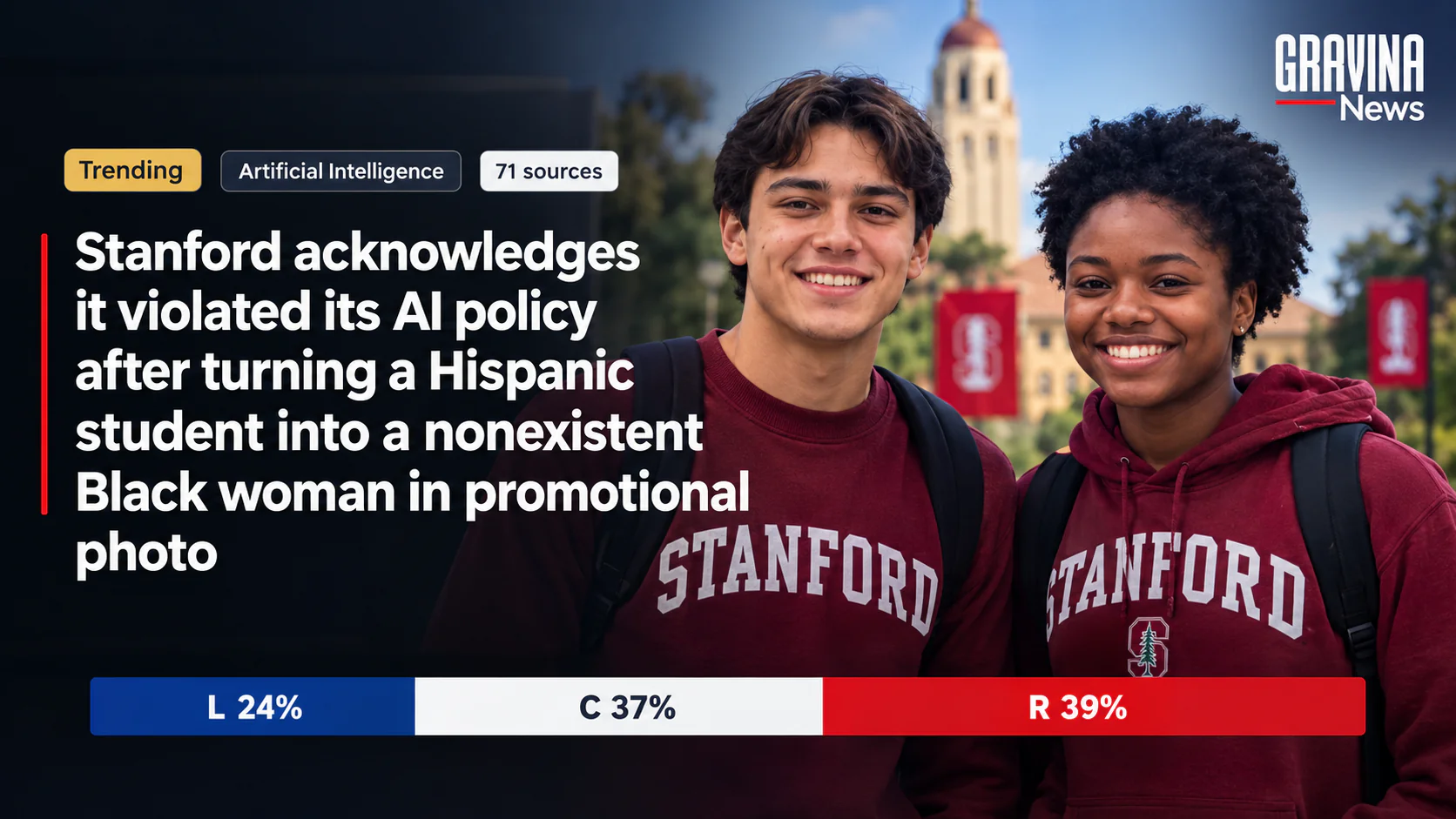
The Stanford AI photo controversy has exploded into national news after the university admitted it used generative AI to digitally replace a Hispanic male student with a nonexistent Black woman in a promotional banner. The altered image, first reported by student-run newspaper The Stanford Review, has sparked outrage across campus and drawn coverage from major outlets including The New York Times, ABC News, and NBC News. However, what makes this story especially striking is that Stanford has one of the longest histories in AI research of any university in the world.
Why the Stanford AI Photo Controversy Matters So Much
This isn’t just a minor editing mistake. The Stanford AI photo controversy touches on serious questions about consent, representation, and institutional accountability.
Here’s why it escalated so quickly:
- Stanford created one of the world’s first artificial intelligence labs back in 1965, making the irony of this incident particularly notable.
- The altered image directly violated the university’s own written AI policy.
- It comes as Stanford already faces federal scrutiny over separate allegations of race-based discrimination.
Additionally, the story gained traction after Stanford student Billy Ramirez posted about it on Fizz, a campus social app, where it quickly went viral before being picked up by national media.
What Actually Happened in the Photo
The Original Image
The photo originally showed three students posing at Wilbur Dining during a 2024 Lunar New Year Dinner: an Asian woman, a White man, and Ramirez, who is Hispanic. According to Ramirez, the unaltered version had already been used in prior university promotional materials without issue.
The AI Alterations
However, Stanford Residential & Dining Enterprises later used a dramatically altered version of the same photo for a welcome banner. The changes included:
- Replacing Ramirez entirely with an AI-generated Black female student who does not exist.
- Digitally slimming the appearance of the other two students in the photo.
- Changing the students’ clothing to Stanford-branded merchandise.
As a result, the final image bore little resemblance to the real students it was supposedly representing.
How Billy Ramirez Reacted
Billy Ramirez, the student removed from the photo, described a complicated emotional response to seeing the altered image. He initially found the AI swap “hilarious,” but his feelings shifted after reflecting further. He later said he felt silenced and erased from a representation that was supposed to include him, and expressed disagreement with Stanford making choices about how he and his peers were portrayed without their consent.
Consequently, Ramirez said he doesn’t want his time at Stanford to be defined by this incident, even as it continues to draw national attention.
Stanford’s Official Response
Following mounting backlash, Stanford University confirmed that both the alteration and the lack of disclosure violated its own policy. A university spokesperson stated clearly that Stanford’s AI policy prohibits producing or altering images of Stanford people, events, research, facilities, or achievements using artificial intelligence.
Stanford’s Next Steps
As a result of the controversy, Stanford has taken the following actions:
- Removed the altered banner from the Governor’s Corner student housing center.
- Publicly acknowledged the policy violation.
- Announced plans to provide additional staff training on AI usage.
- Committed to stronger review processes for future promotional materials.
Broader Context Surrounding the Controversy
The Stanford AI photo controversy arrives at a particularly sensitive moment for the university. Stanford has seen declining Black and Hispanic enrollment since the Supreme Court’s 2023 decision ending affirmative action, with the Class of 2029 seeing Hispanic enrollment drop from 15% to 12.4% and Black enrollment fall from 7% to 5.8%.
Additionally, the incident comes as Stanford faces separate scrutiny from federal regulators examining whether one of its teacher-certification programs violated Title VI by conditioning benefits on race.
Student Reactions on Campus
Many students expressed frustration that Stanford would digitally alter representation rather than reflect its genuinely diverse student body. One Stanford freshman pointed out that the university already enrolls students from more than 60 countries, arguing there was no need to fabricate diversity that already exists on campus.
Common Questions About the Stanford AI Photo Controversy
Who discovered the altered Stanford photo?
The Stanford Review, a student-run newspaper, first reported the story after the image went viral on the Fizz app.
Did Stanford admit wrongdoing?
Yes, the university confirmed the alteration and lack of disclosure both violated its AI policy.
Where was the altered photo displayed?
It was used in a custom banner at the Governor’s Corner student housing center, which has since been removed.
Common Mistakes to Avoid
- Don’t assume this was a simple filter or minor edit — the alteration completely replaced one student’s identity, race, and gender.
- Don’t overlook the consent issue — none of the students were reportedly asked before their images were altered.
- Don’t confuse this incident with Stanford’s separate federal scrutiny over admissions policies; they are related in context but are distinct issues.
Conclusion
The Stanford AI photo controversy has become a significant flashpoint in the broader national conversation about AI ethics, consent, and representation on college campuses. With Stanford publicly acknowledging the policy violation and committing to staff training, the university now faces the challenge of rebuilding trust with students like Billy Ramirez, who felt erased by the very institution meant to represent them. As AI tools become more common in everyday use, this incident is likely to remain a widely cited example of the risks institutions face when using the technology without proper oversight.