

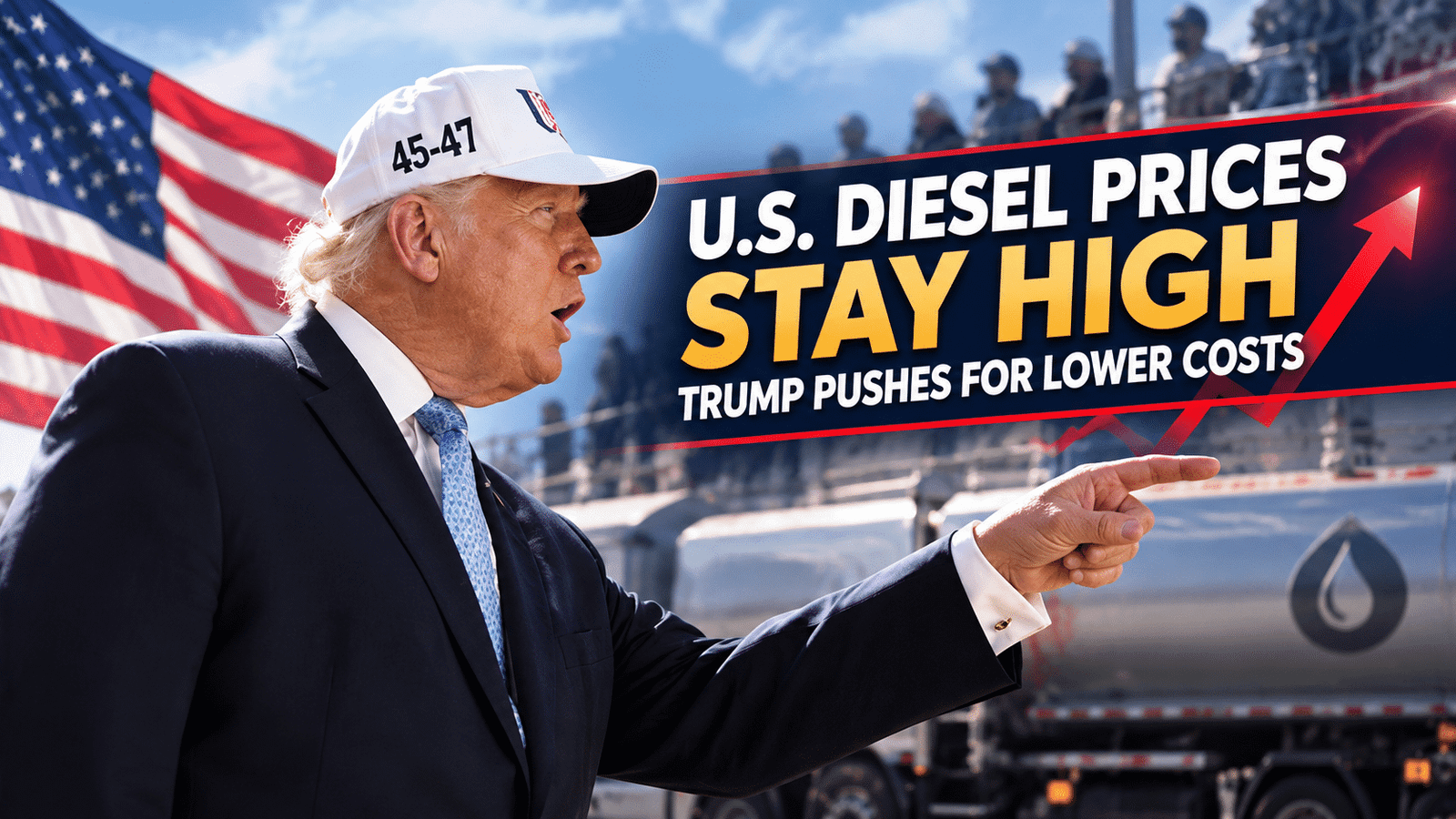
Diesel Export Ban Debate Heats Up as US Prices Hit Record Highs
A potential diesel export ban is now being seriously debated in Washington as diesel prices climb to painful new highs. Prices hit $6.50 a gallon on Friday, September 25, 2026, driven by tensions between the United States and Iran along with the ongoing war between Russia and Ukraine. However, the proposal has sharply divided lawmakers and energy experts alike.
Why the Diesel Export Ban Conversation Matters Now
This isn’t a small policy footnote. The diesel export ban debate touches the US economy at nearly every level, since diesel powers the trucks that move most of the country’s food and goods.
Here’s why it’s suddenly a major story:
- The United States is currently the world’s largest diesel exporter.
- US diesel exports are equivalent to about 40% of domestic consumption.
- The debate comes just ahead of the 2026 midterm elections, where cost of living remains a top voter concern.
Additionally, President Trump said this week that he supports restricting diesel exports, giving the idea new momentum inside his own party.
What Sparked the Diesel Export Ban Push
Trump’s Comments
According to Al Jazeera, Trump remarked on Tuesday that he backs limiting diesel exports from the US. This followed pressure from several Republican lawmakers who argue a ban could ease costs for American consumers.
Congressional Support
Senator John Hoeven, who has previously argued that lifting export bans increases supply and lowers prices, said any ban would need to be temporary. He suggested it could still “send a signal to the market” even on a short-term basis.
Separately, Senator Chuck Grassley said he was encouraging Trump to place a temporary embargo on diesel exports through executive action.
Arguments in Favor of a Diesel Export Ban
Supporters of a diesel export ban make a straightforward case: if less US diesel leaves the country, more stays home, which could lower domestic pump prices.
- It could offer relief for truckers and small businesses facing record fuel costs.
- It could act as a political signal to markets that the government is responding.
- Some lawmakers see it as a short-term fix while other supply measures are explored.
Arguments Against a Diesel Export Ban
However, many energy analysts and industry groups warn the policy could backfire.
The Global Market Problem
Diesel is traded globally, so restricting US exports wouldn’t isolate American prices from the rest of the world. As a result, some experts argue the ban wouldn’t meaningfully separate the US market from international price pressures.
The Supply Disincentive Argument
Critics also argue that an export ban discourages refinery production. Because refiners plan output partly around export markets, reduced access to those markets could lower overall supply rather than increase it.
The Long-Term Cost Concern
One opinion piece in The Hill put it bluntly: an export ban might lower prices for a few weeks but could raise them for years, since it works against the incentives that encourage more production.
Alternative Solutions Being Discussed
Instead of a ban, some critics argue Congress should focus on boosting supply directly. Suggested alternatives include:
- Repealing the Renewable Fuel Standard’s biomass-based diesel mandate.
- Reducing high ethanol mandates that add cost to the fuel pool.
- Encouraging increased domestic refinery output.
Consequently, the debate isn’t just about exports — it’s about which approach actually increases the amount of diesel available to American drivers.
How US Diesel Production Has Changed
For context, domestic oil production has grown dramatically over the past decade. US output rose from just over 9 million barrels a day in 2015 to nearly 14 million barrels a day in 2026, helping the country become the world’s largest petroleum producer. This growth is part of why some critics worry a diesel export ban could undercut hard-won production gains.
How This Compares to Other Countries’ Export Bans
The US wouldn’t be the first country to consider this move. Russia banned diesel exports in September 2023 for several weeks, later lifting most restrictions after finding it didn’t have enough storage capacity to sustain a long-term ban. That episode drove up prices in Europe and hit importers like Turkey and Brazil particularly hard, offering a real-world example of how such bans can ripple through global markets.
Common Questions About the Diesel Export Ban
Has the US actually banned diesel exports?
No. As of this report, it remains a proposal under serious discussion, not an enacted policy.
Why does Trump support a diesel export ban?
He has cited concerns over record-high domestic fuel prices affecting American consumers.
Would a diesel export ban lower prices?
Experts are divided. Some argue it could offer short-term relief, while others warn it could reduce supply and raise prices over time.
Common Mistakes to Avoid
- Don’t assume a ban is already in effect — it remains a proposal, not law.
- Don’t confuse this debate with the UK’s 2030 ban on new diesel vehicle sales, which is a separate policy entirely.
- Don’t overlook that diesel trades globally, meaning a US-only ban may not isolate domestic prices as intended.
Conclusion
The diesel export ban debate reflects a real tension between offering fast relief to drivers and the risk of unintended economic consequences. With Trump’s public support adding weight to the proposal and record prices fueling political pressure, this is a story likely to develop quickly in the weeks ahead. As with any major energy policy shift, the outcome will depend on how lawmakers weigh short-term relief against long-term supply risks.